
Small Unmanned Aircraft Systems
(Also known as sUAS’s or Drones)
My drone hobby originally took off in 2012 with a Parrot AR.Drone, flown by using an app on a phone and a Wi‑Fi datalink. It was fun but frustratingly limited—until I discovered a user named Miru on RCGroups.com, who created the MiruMod, a hack that let you fly the AR.Drone with a standard DSM2 RC transmitter. That provided for better range, finer control, and a much more “real” flying experience.
Based on the success of this somewhat technical project with tiny components and an Arduino Nano, I decided to build my own drone from scratch. Back then, a DIY build meant wiring together inertial, GPS, and other sensors and running a carefully tuned PID control loop to keep it stable. That was the part I never got right: my home-built drone took off quickly, but it came down just as fast. So, I gave up and sold off the parts.
At the end of 2025, I jumped back in and bought a DJI Neo 2, packed with obstacle avoidance, smart return‑to‑home, and other impressive features. Not long after, I added a DJI Mini 5 Pro, which flies longer and does more. The Neo 2 is my go‑to for quick, simple video, even without a dedicated remote. The Mini 5 Pro, though, taught me that the real challenge isn’t just flying—it’s capturing great photos and video. I have spent more time learning photo and videography techniques than honing my flying skills.
If you react negatively when you hear the word “drone,” I get it. Unfortunately, too many people buy drones and treat them as harmless toys. But maybe you should “hate the player, and not the game.” In other words, it is OK to dislike the all-too-many irresponsible pilots while loving the amazing technology that empowers almost anyone to create and accomplish some tasks to an extent never before possible. On this page, I will present just a few examples of what a responsible new pilot (like me) can do with an inexpensive, half-pound, unmanned aerial system (drone) with little training or experience.
Toward the bottom of this page, there is a brief introduction to what a new pilot should know.
Note that I use the official FAA terminology “small unmanned aircraft system” or sUAS to refer to drones with or without a control station and supporting hardware (including cell phones).
A small drone with a good camera is a safe way to visually inspect the antennas and hardware on a tower, a roof vent, or to see if your rain gutters need to be cleaned out.
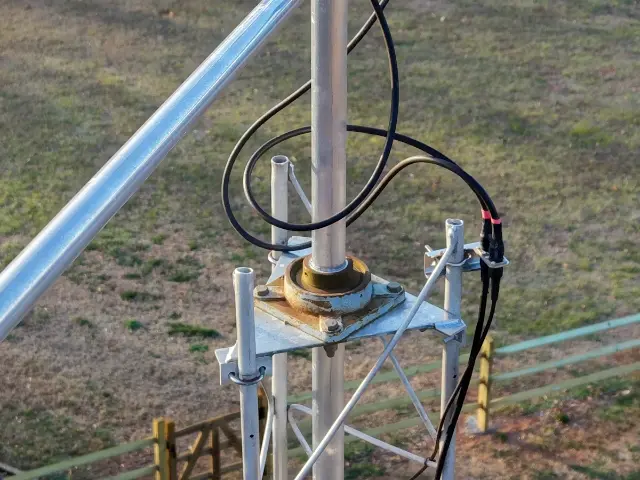
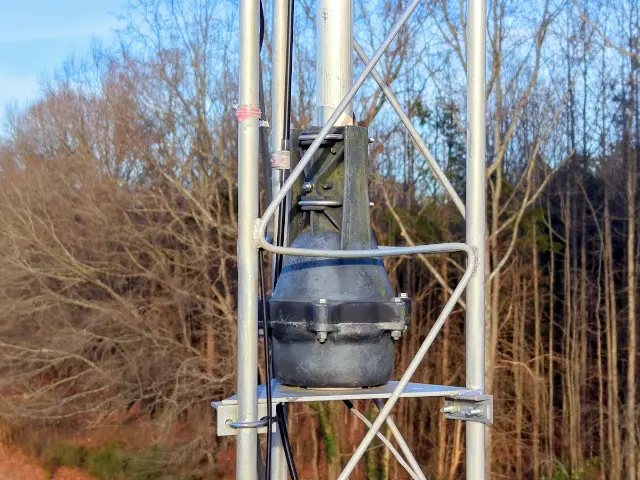
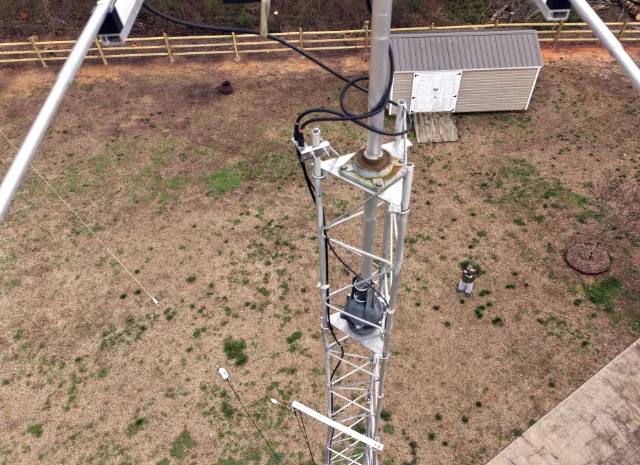
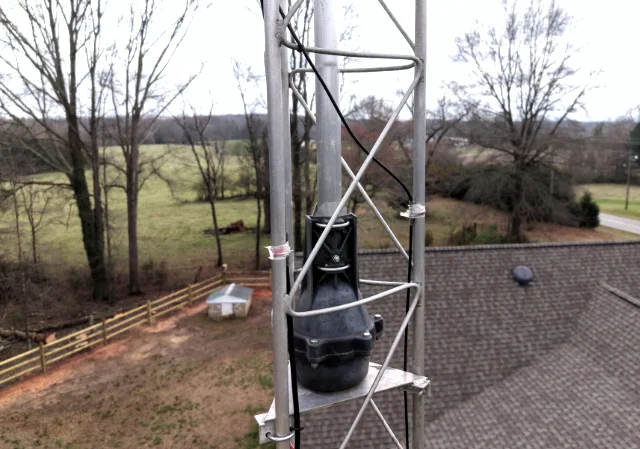
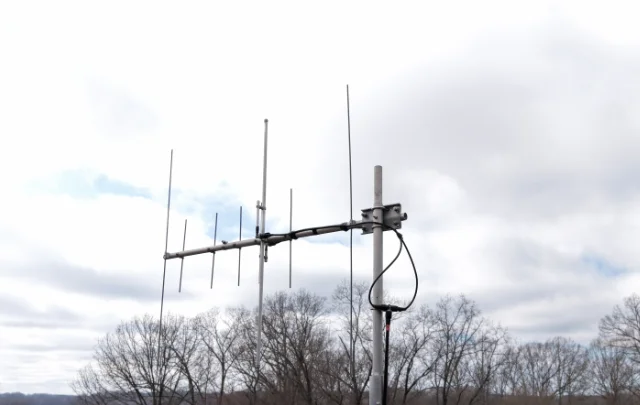
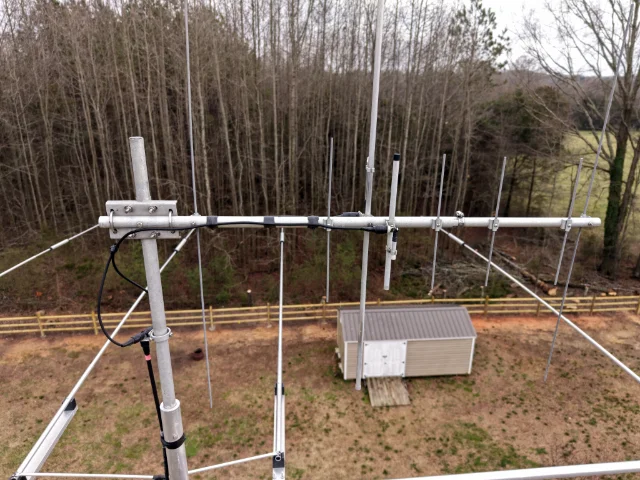
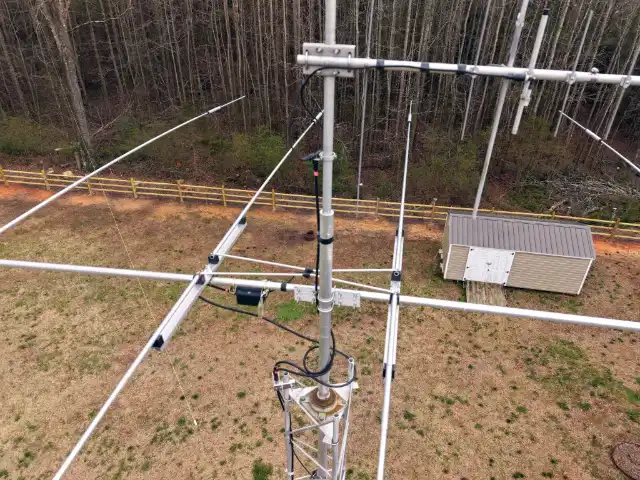
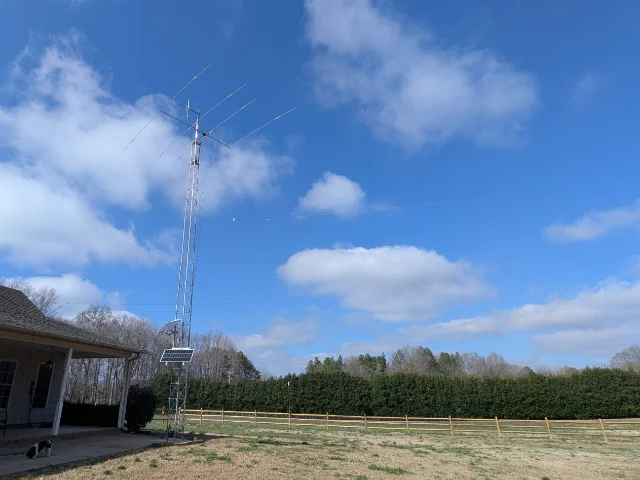
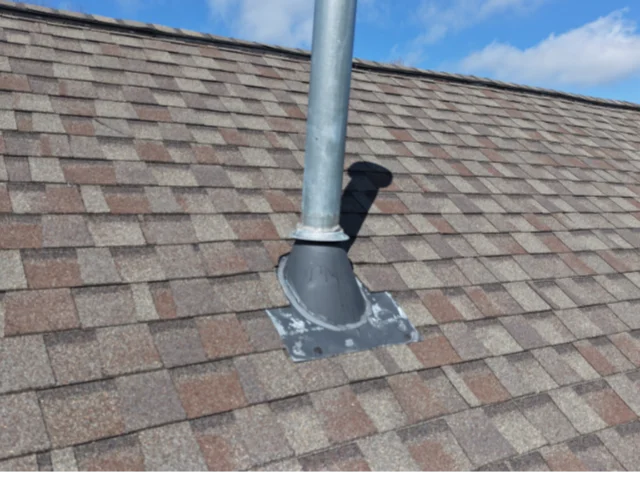
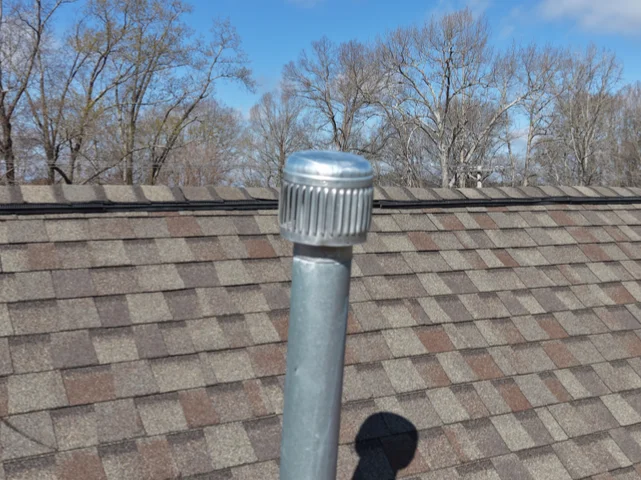
Perhaps the most common use of sUAV’s is in real estate marketing. This is my first attempt to produce a video that could be used in a real estate listing:
A 360-degree aerial panoramic photo is easy to produce with my sUAS. This is the area around my QTH (aka home). Click and drag the mouse to change the view. Use scroll wheel to zoom in and out.
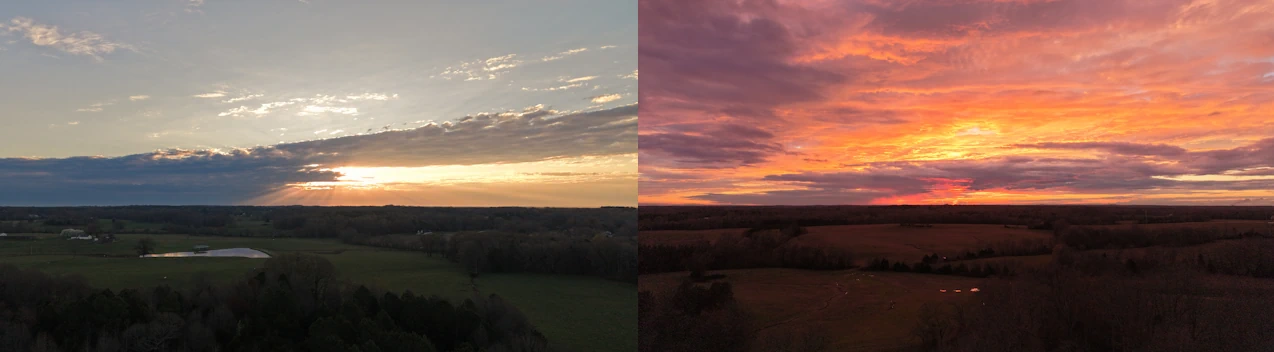
Sunrise and Sunset from altitude
Admittedly, the above examples are not very impressive. This is because I have been taking baby steps – learning how to fly the drone safely and to use each of its many capabilities, solely from my own backyard. And also, because it was winter. But the possibilities are endless, limited much more by legal restrictions than by the capability of the equipment. Click here to see one artistic example of what can be achieved by someone with the same model of sUAS that I used.
My little drone has even more tricks up it’s sleeve. One that is definitely on my bucket list is Hyperlapse, or a time-lapse video with added camera movement. A 3-D model can be created by flying a drone around it and processing the video with software, some of which is free. A simple drone can be used but for best results a specialized model is used.
Well beyond my ambitions are the public service functions such as search and rescue, and real-time aerial surveillance of active fires or other dangers to public safety. One aspect of drone use that I can promise I will never touch is delivery service, but sooner than you expect, you might well get you online orders dropped right at your door by a unmanned flying machine.
About the legal considerations in the United States:
It frequently happens that someone gets a drone (a small unmanned aircraft or sUAS) and is unaware of the laws that apply to them, even when flying their new toy in their own backyard. They might not even know they need to keep their sUAS within sight, even though the drone can fly much farther.
In the United States, the Code of Federal Regulations section 14 CFR Part 107 regulates the civilian (non-military) operation of drones under 55.0 pounds (more properly referred to as small unmanned aircraft systems or sUAS). It applies to flying in all of the National Air Space (NAS), which includes both controlled and uncontrolled airspace. In effect, this means all the airspace above ground, at any altitude (except for outer space).
A default requirement to operate an unmanned aircraft system under 55 pounds in the NAS is to obtain a Remote Pilot Certificate from the FAA, usually called a Part 107 Certificate. To get certified as a remote pilot under Part 107, one needs to pass a sixty-question test and satisfy other requirements. The cost is $175, and the test can be taken at a number of local centers.
There is a limited but very popular exception to this requirement. It is called the Exception for Limited Recreational Operations of Unmanned Aircraft (USC 44809). It applies to someone who flies a drone solely for recreation, and includes some other important requirements. This exception is very limiting. Under this rule, posting a video of your recreational drone flight on the Internet is OK, but if the same video is posted on monetized social media, then it is a violation unless you had Part 107 certification.
Many new drone owners are unacquainted with the requirement that requires certification, even under the Exception for Limited Recreational Operations of Unmanned Aircraft for remote pilots. But in this case, the certification requires taking The Recreational UAS Safety Test (TRUST). This training is done online and takes only 15-20 minutes. The test always permits passing as part of the process.
I learned about the TRUST certification at about the same time I bought my first sUAS and immediately completed the training. Then, in only a few weeks, I decided to go for the Part 107 certification to allow for more wide-ranging use of my sUAS. I studied for about two weeks and found it well worth the effort. In fact, I would argue that even recreation-only pilots should receive training and education beyond the very minimal TRUST requirement.
In addition to the training and certification requirements, there are State and Local laws and regulations that sUAS pilots should be complying with. Most of the NC State Statutes restricting the use of sUAS’s are common sense, but two merit particular attention:
- It is illegal to launch or recover a UAS from either private or state property without the consent of the property’s owner (N.C. G.S. 15A-300.2)
- It is illegal to use a UAS to conduct surveillance of a person, or a dwelling occupied by a person and that dwelling’s curtilage, without the person’s consent, or to photograph an individual, without the individual’s consent, for the purpose of publishing or otherwise publicly disseminating the photograph. (N.C. G.S. 15A-300.1 and N.C. G.S. 14-401.25).
Local governments routinely enact regulations affecting sUAS pilots. For example, while they have no authority to regulate the airspace, the county where I live bans the launching of drones from all county parks.
In general, sUAS’s need to be registered with the FAA unless they weigh under 250 grams AND are used under the recreation exception. Registration is an easy process that costs five dollars for a three-year registration. Any sUAS that needs to be registered is also required to broadcast a remote ID. That functionality is usually included with any drone that weighs 250 grams or more.
So, there you have my four-hundred-foot view of things. I would call it my ten-thousand-foot view, but one of the first things you learn about flying drones is that, with very few exceptions, you can’t fly more than 400 feet above the ground. Reasonable remote pilots will make the effort to learn and keep abreast of the regulations, which continue to evolve with the growing use of this technology.